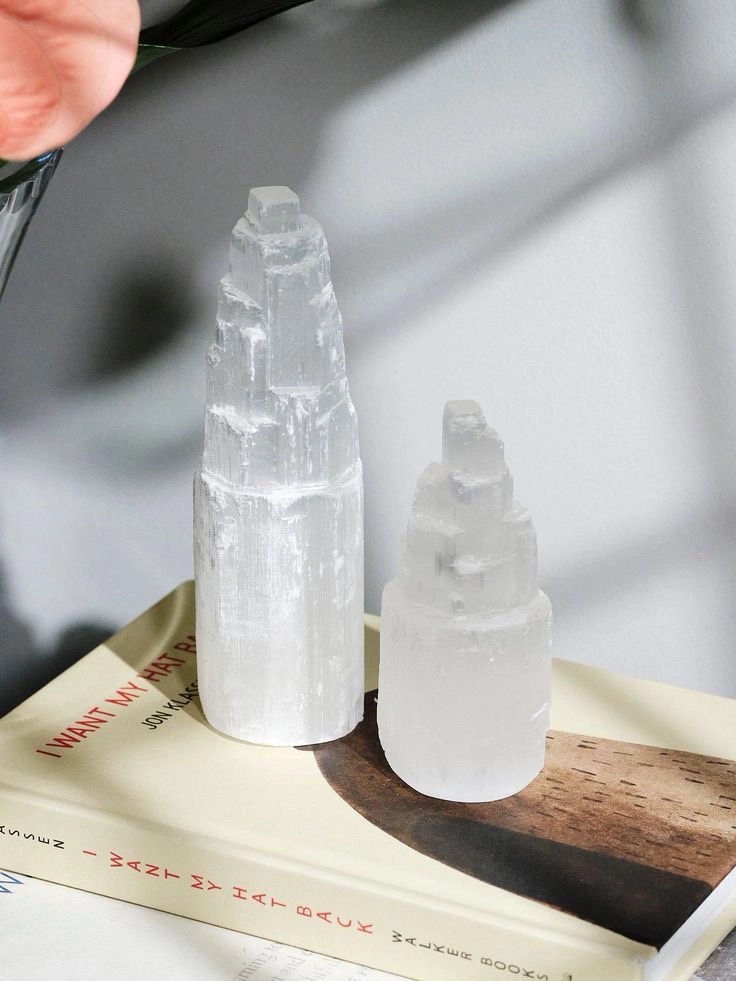
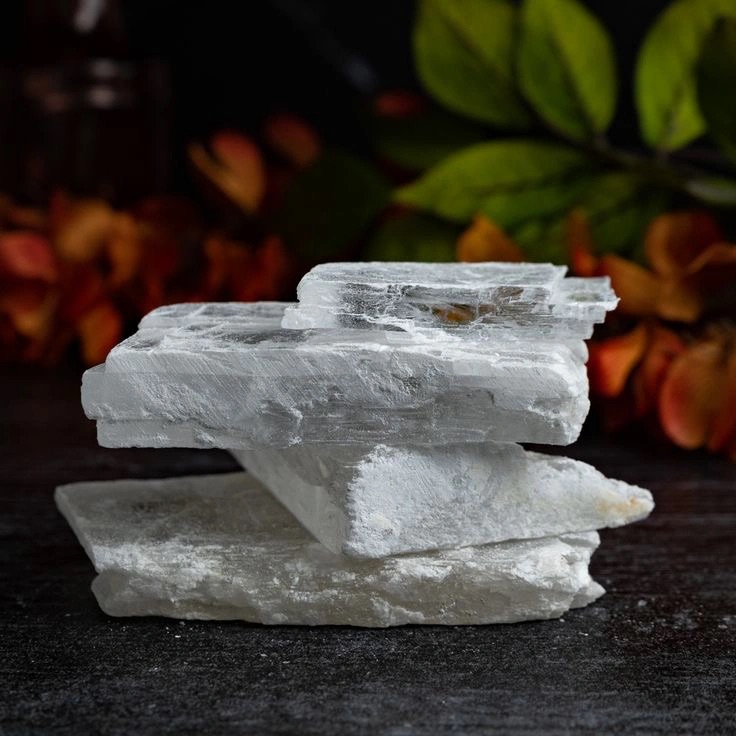
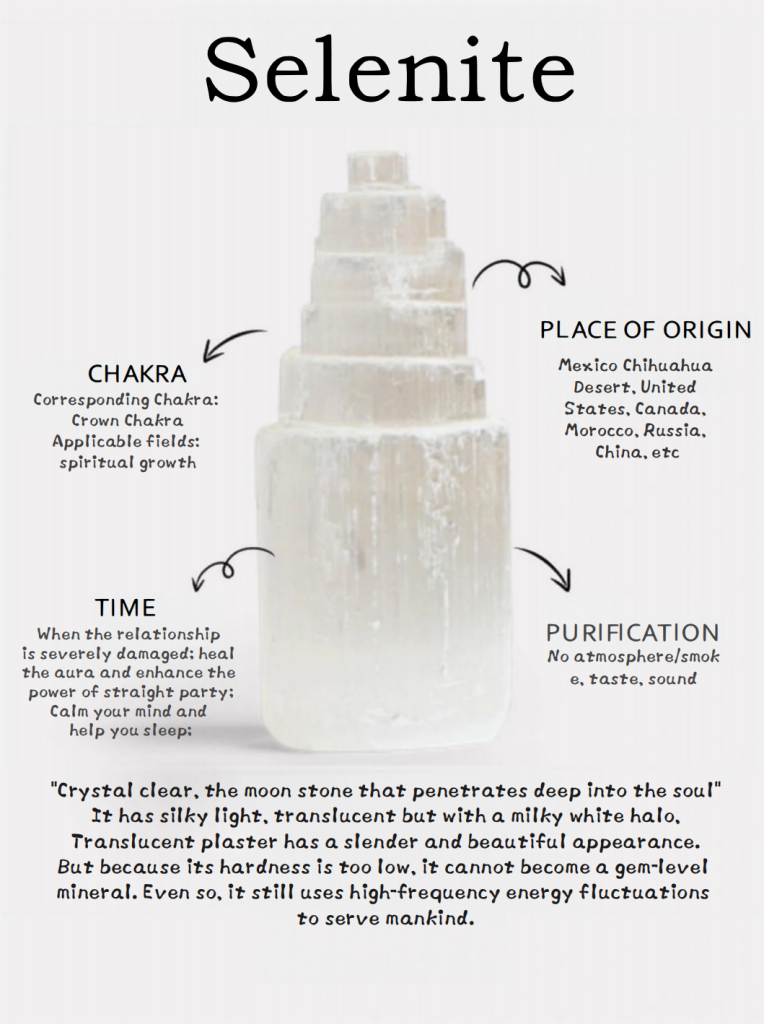
✨Selenite, also known as “transparent gypsum,” is part of the same mineral family as gypsum (calcium sulfate) and is composed of calcium sulfate dihydrate. Major sources of this mineral include Mexico, Morocco, and the United States. The appearance of selenite can vary significantly, with higher-grade transparent varieties almost completely clear, showing only a subtle thread-like reflection. From a distance, it might resemble clear quartz. Another common form, known as Satin Spar, has a snow-white, translucent look, with a soft, brushed-metal-like reflection that exudes a calming and healing beauty.
Crystal - Selenite
Historical Significance and Naming of Selenite
🔮Selenite has been used since ancient times, with the Romans crafting it into window glass. The name Selenite was first introduced by Swedish chemist and mineralogist J.G. Wallerius (1709-1785) in his influential work Mineralogia. The term comes from the Greek word for the moon, Selene, likely due to the stone’s soft, moon-like glow. This historical connection to both ancient civilizations and scientific discovery adds to the allure of this beautiful and versatile mineral.
Crystal - Selenite
Selenite's Healing and Purifying Energy
🔮As a healing crystal, selenite is renowned for its purifying energy and calming vibrations. When held, it is said to create a sense of peace and serenity, helping to relieve stress, soothe anxiety, and promote inner harmony. Selenite is often used in energy work to cleanse spaces or other crystals, making it a popular choice for those seeking to balance their emotional and spiritual well-being. Its gentle energy and luminous appearance make it a favorite among crystal enthusiasts for both its aesthetic and metaphysical properties.