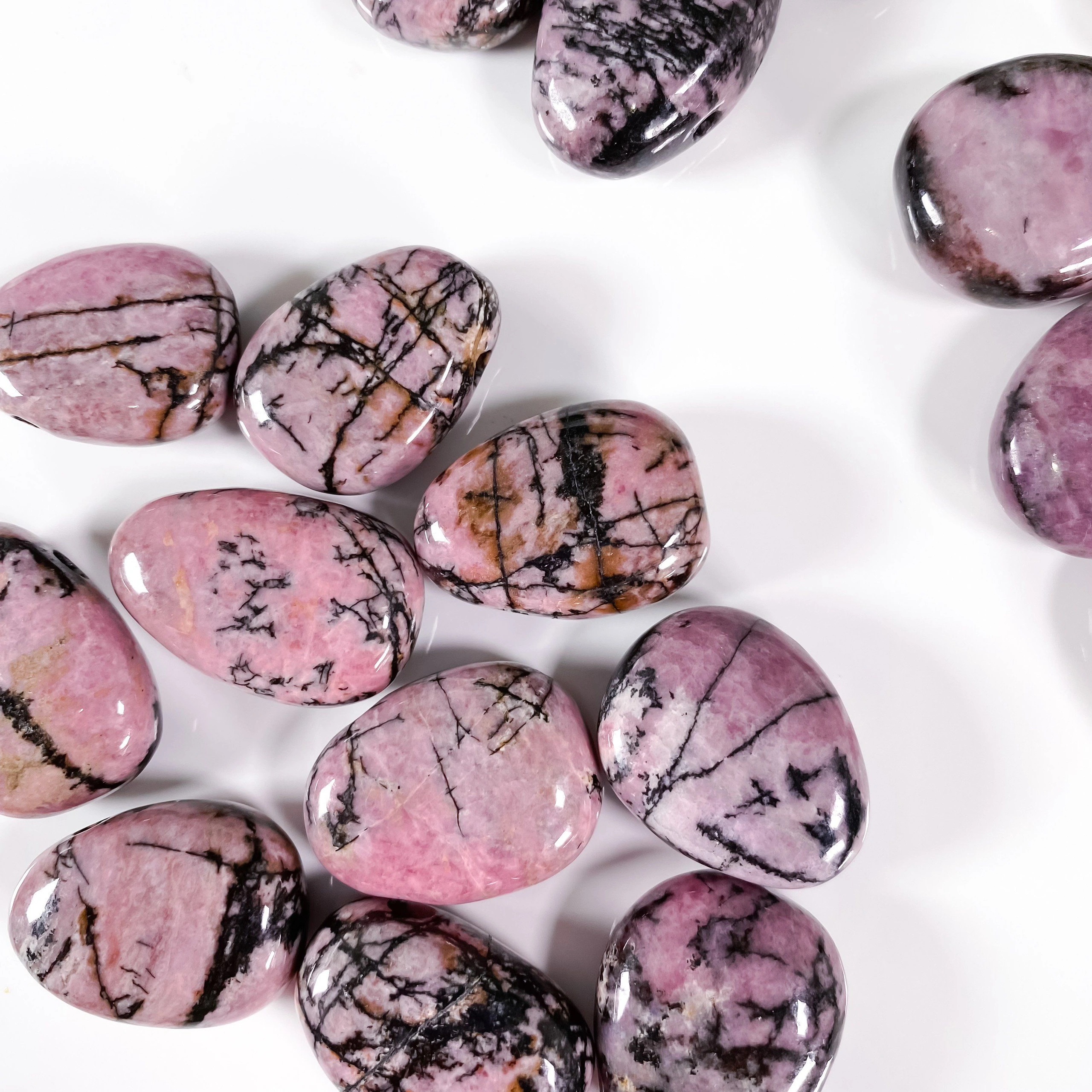
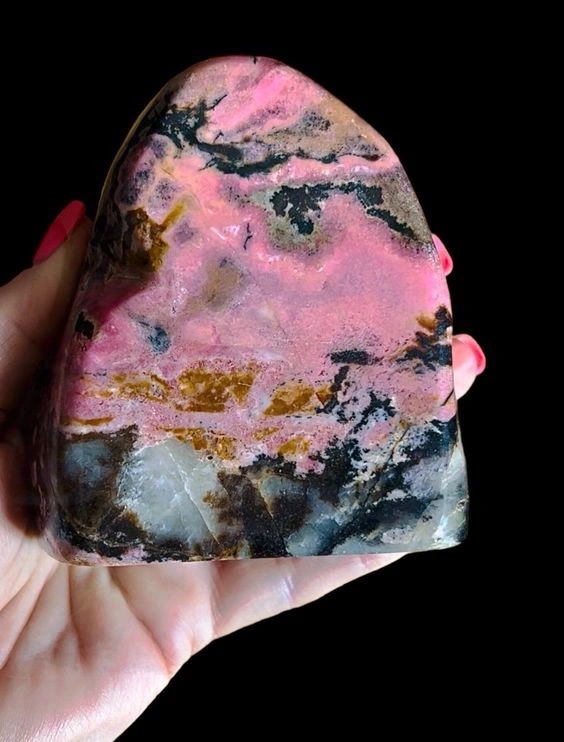
✨In 1819, a German scholar, mesmerized by a pink ore rock specimen, was reminded of a blooming rose. Inspired by this vision, he named the mineral Rhodonite, taking the word “Rhodo” from the Greek, meaning “rose,” to capture the gemstone’s vibrant pink hue. The name reflects the natural beauty and rose-like color that defines this captivating stone.
Crystal - Rhodonite
The Composition and Varieties of Rhodonite
🔮Rhodonite is a chain silicate mineral whose composition can vary due to the presence of calcium, iron, magnesium, and zinc. These elemental substitutions result in different varieties of the mineral. Rhodonite rich in iron and zinc is known as iron-rich rhodonite or zinc rhodonite, respectively. These variations also influence the stone’s color, giving it slight differences in hue, though pink remains the dominant and defining shade.
Crystal - Rhodonite
Rhodonite's Historical Significance in Russian Art and Culture
🔮Throughout Russian history, rhodonite has held a special place as a significant carving stone. It was used to create decorative columns, stone bowls, and tiles, often found in the homes of Russian nobility and even the czar. One of the most famous rhodonite artifacts is the sarcophagus of Maria, Queen of Alexander II, which weighs a staggering 12 tons and is displayed at the Peter and Paul Cathedral. This grand use of rhodonite showcases its historical importance and enduring beauty in both art and architecture.