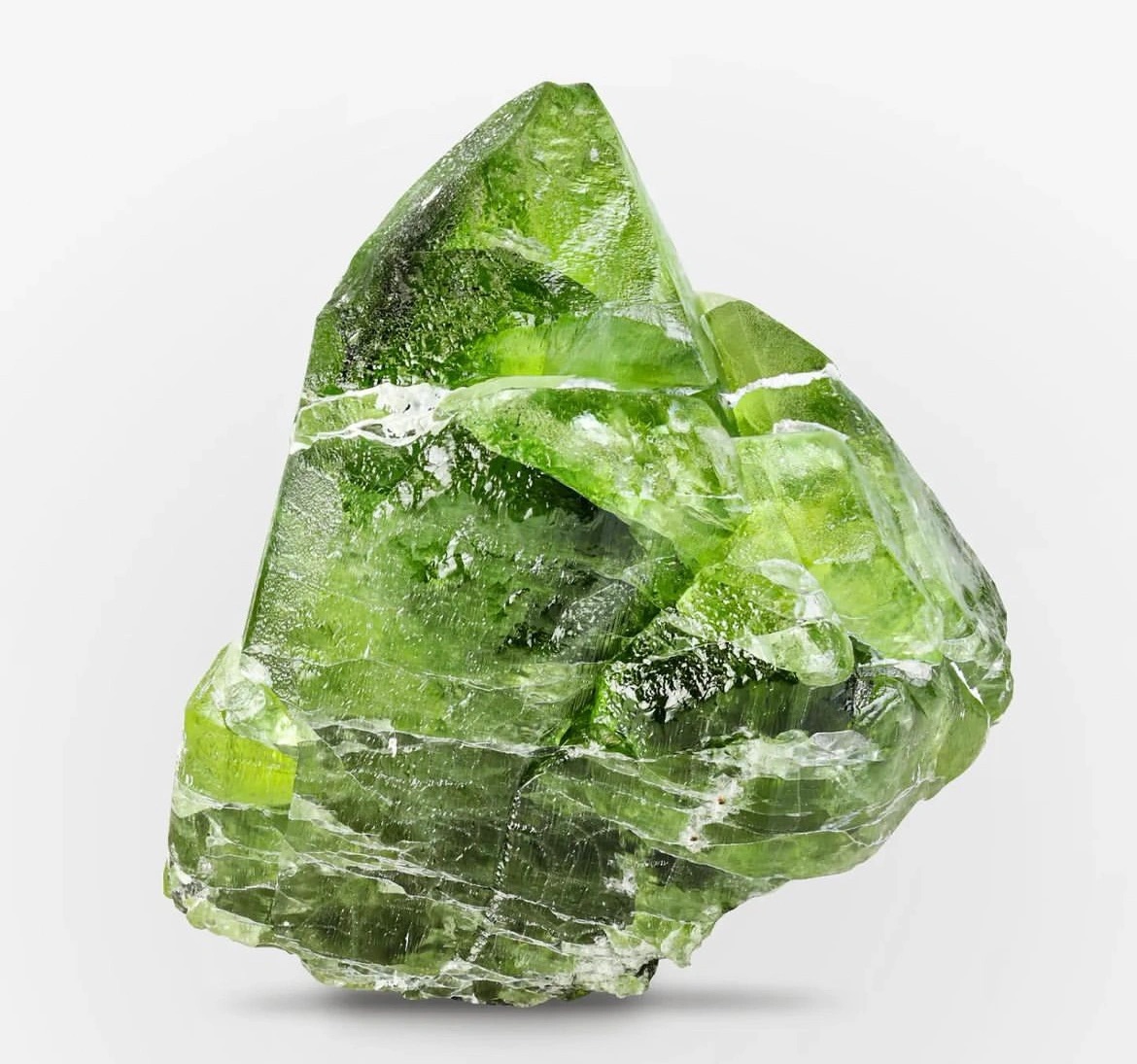
The Composition and Historical Significance of Peridot
✨Peridot, one of the oldest known gemstones, holds a prominent place in history as one of the most important green gemstones. It belongs to the olivine mineral group and crystallizes in the orthorhombic crystal system, characterized by its typical isolated silica tetrahedral structure. This gemstone originates from the Earth’s mantle, where it forms as magnesia-ferric silicate within its parent rock. Peridot typically appears as granular crystals, either as dispersed particles or as aggregates within the rock.
Crystal - Peridot
The Symbolism and Ancient Reverence of Peridot
🔮 As the birthstone for August, peridot is closely associated with Leo, symbolizing peace, luck, and other positive wishes. The gemstone’s history dates back over 3,500 years, with its first discovery on the island of St. John in Egypt. The ancient Egyptians believed that peridot was a gift from the Sun God, making it a sacred gem connected to the sun. It was used to adorn gods and temples, alongside other revered stones like lapis lazuli and emeralds, and was considered a powerful healing stone. The Sun, Leo’s ruling star, is symbolically linked to peridot, often referred to as the “sun gem.”
Crystal - Peridot
Peridot in Modern Jewelry and Design
🔮 In modern times, peridot’s fresh, vibrant color, reminiscent of green grass, has captivated international jewelry designers, particularly those with a penchant for naturalistic styles. The gemstone’s lively hue has earned it the title of “Muse” among these designers, leading to its frequent use as the centerpiece in high-end jewelry collections by well-known international brands. Peridot continues to be celebrated not only for its historical and symbolic significance but also for its timeless beauty in contemporary fashion.