The Origins and Formation of Malachite
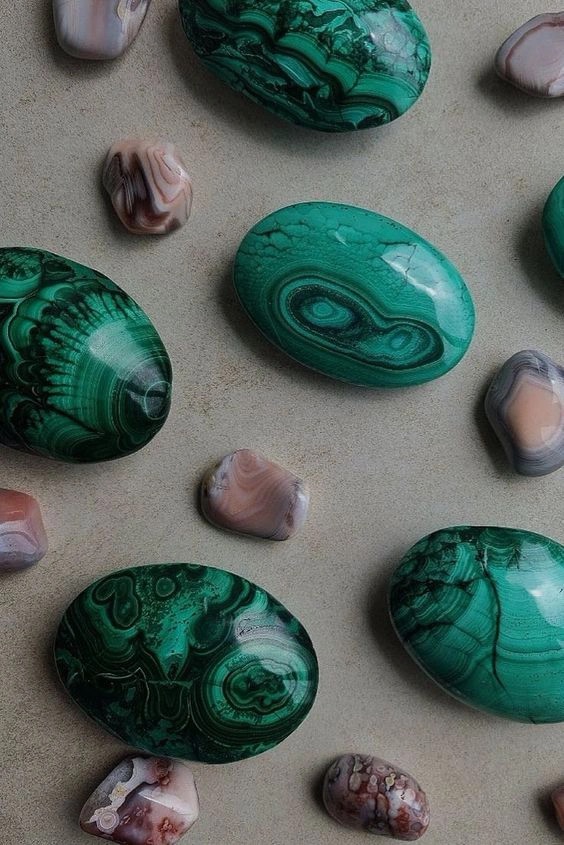
✨Malachite derives its name from the Greek word “Malakee,” referring to a plant in the Malvaceae family. This vibrant green gemstone is a copper-containing carbonate mineral commonly found in copper deposits. Malachite often forms alongside other copper-carbon materials, such as azurite, creating a variety of color combinations. When malachite encounters hydrochloric acid or other strong acids, it dissolves, and during the process of re-precipitation and crystallization, it forms layers of varying green shades. These patterns, reminiscent of a peacock’s tail feathers or concentric circles, are what give malachite its distinct and mesmerizing appearance.

The Uses and Cautions of Malachite
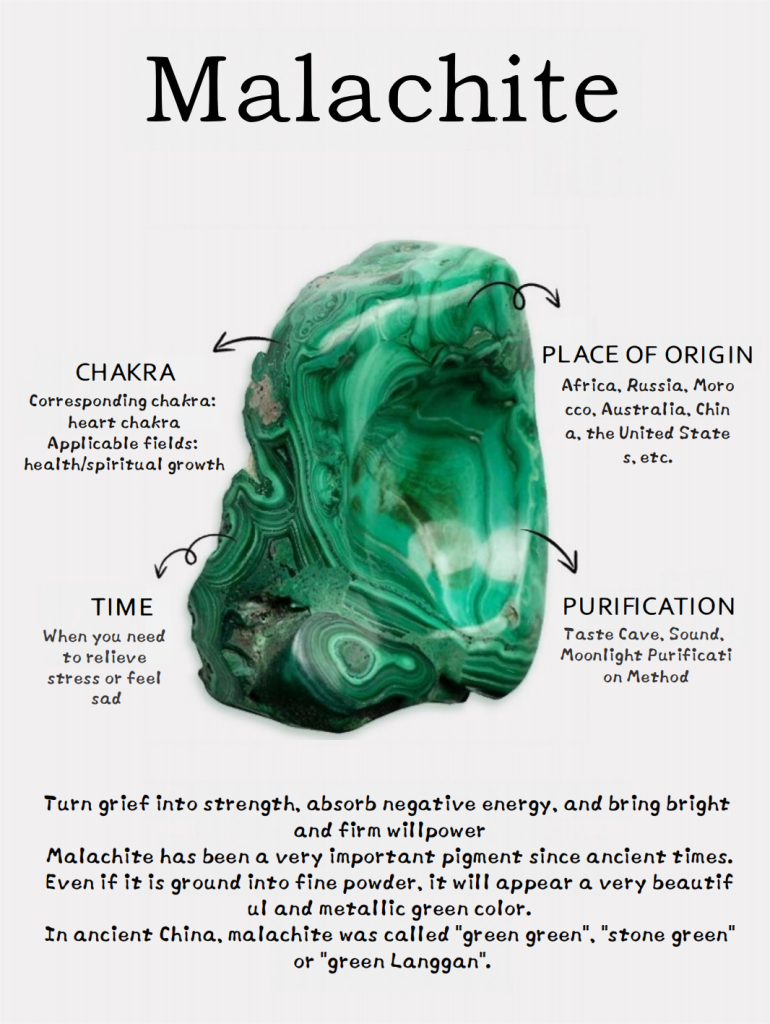
🔮While malachite powder is toxic and can cause pneumoconiosis if inhaled, it has historically been used for its medicinal properties. After proper treatment, malachite can serve as an antidote to phosphorus poisoning. Beyond its medical applications, malachite has played a significant role in the arts. Its vibrant green hue made it a valuable pigment, reportedly used by Cleopatra as an eye shadow ingredient. Even today, malachite continues to be used in art restoration, helping to bring ancient paintings back to their original splendor.
Malachite's Artistic and Cultural Significance
🔮In addition to its practical uses, malachite’s striking beauty has made it a cherished gemstone throughout history. Its unique patterns and vivid green color make it a popular choice for jewelry and ornamental pieces. Despite its toxicity in powdered form, malachite’s allure as a gemstone and pigment endures, reflecting its deep-rooted connection to art and culture across the ages. Whether admired in its raw form or as part of an artistic creation, malachite remains a gemstone of remarkable historical and aesthetic value.