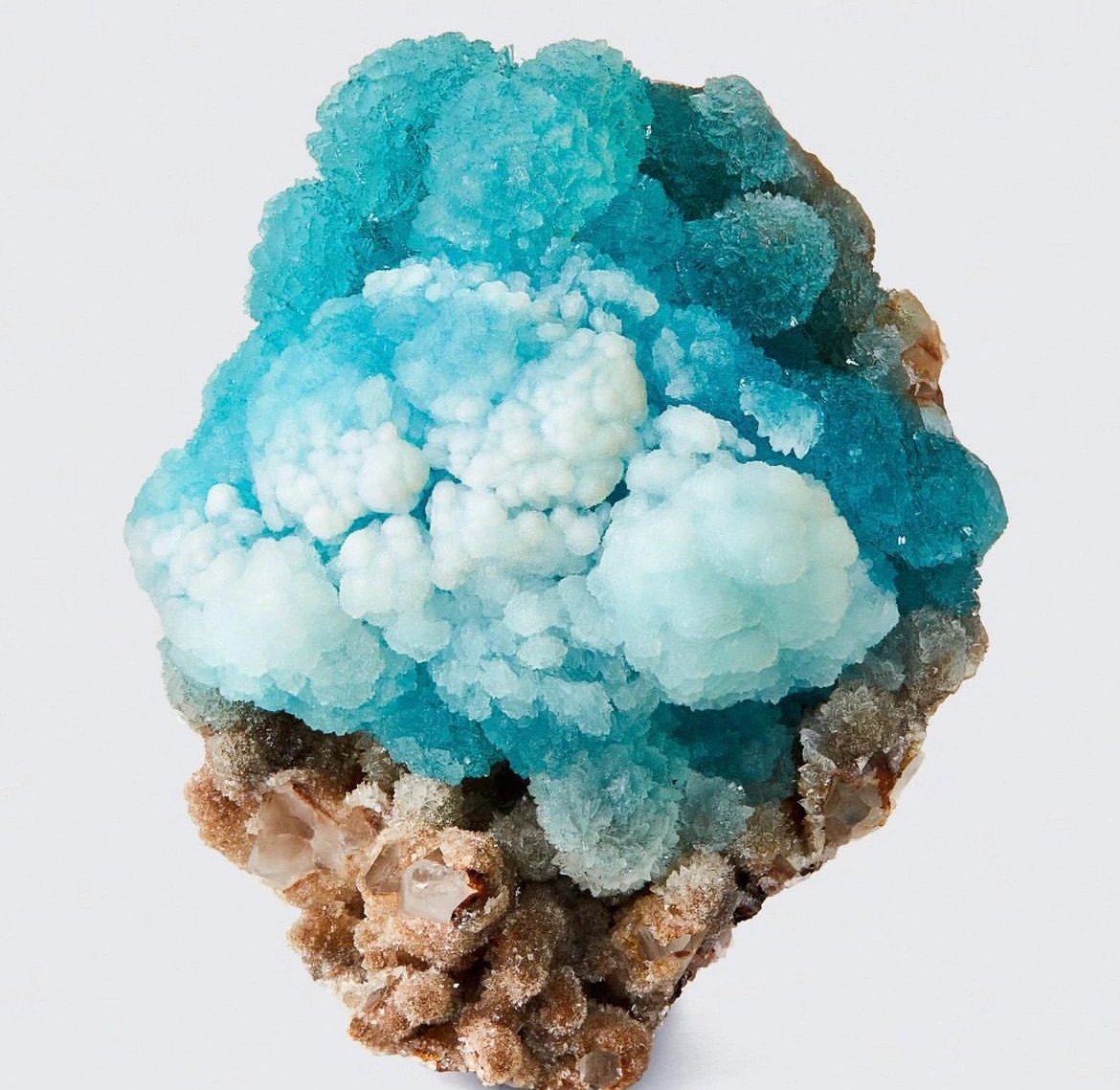
✨Hemimorphite is a zinc silicate mineral often referred to as “calamine” due to its resemblance to the mineral used in calamine lotion. Its name comes from the Greek words “hemi” (half) and “morph” (shape), reflecting its unique crystal formation, which often exhibits asymmetrical growth. Hemimorphite typically forms in the oxidation zones of zinc deposits and is commonly found alongside other minerals like smithsonite, calcite, and willemite. Its secondary mineral status makes it a fascinating part of zinc-rich environments.
Crystal - Hemimorphite
The Unique Crystal Structure and Colors of Hemimorphite
🔮Hemimorphite stands out for its distinctive crystal structure, crystallizing in the orthorhombic system. It often forms prismatic or plate-like crystals, with varying degrees of transparency from transparent to opaque. The mineral can be found in a range of colors, including white, yellow, green, gray, and the most popular and sought-after shade, blue. Its unique crystalline structure and vibrant color variations make hemimorphite a visually captivating mineral, appreciated by both collectors and gem enthusiasts.
Crystal - Hemimorphite
Industrial and Gemological Applications of Hemimorphite
🔮Hemimorphite has both industrial and gemological significance. In industrial settings, it is considered a valuable zinc ore, and zinc itself is an essential metal used in many industries. As a gemstone, hemimorphite’s striking blue color and unique appearance make it a popular choice for jewelry, often cut into cabochons, beads, or carved into decorative ornaments. Its combination of beauty and utility makes it a versatile mineral with applications that span both practical and aesthetic purposes.