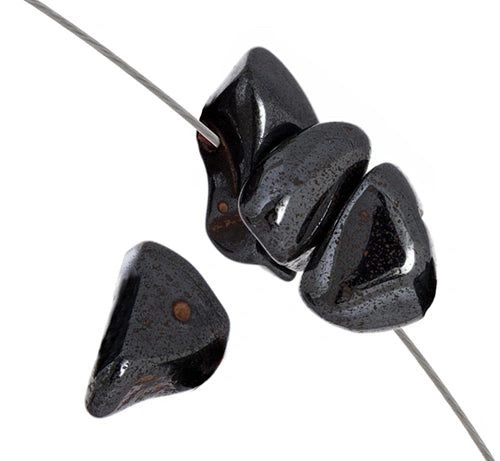
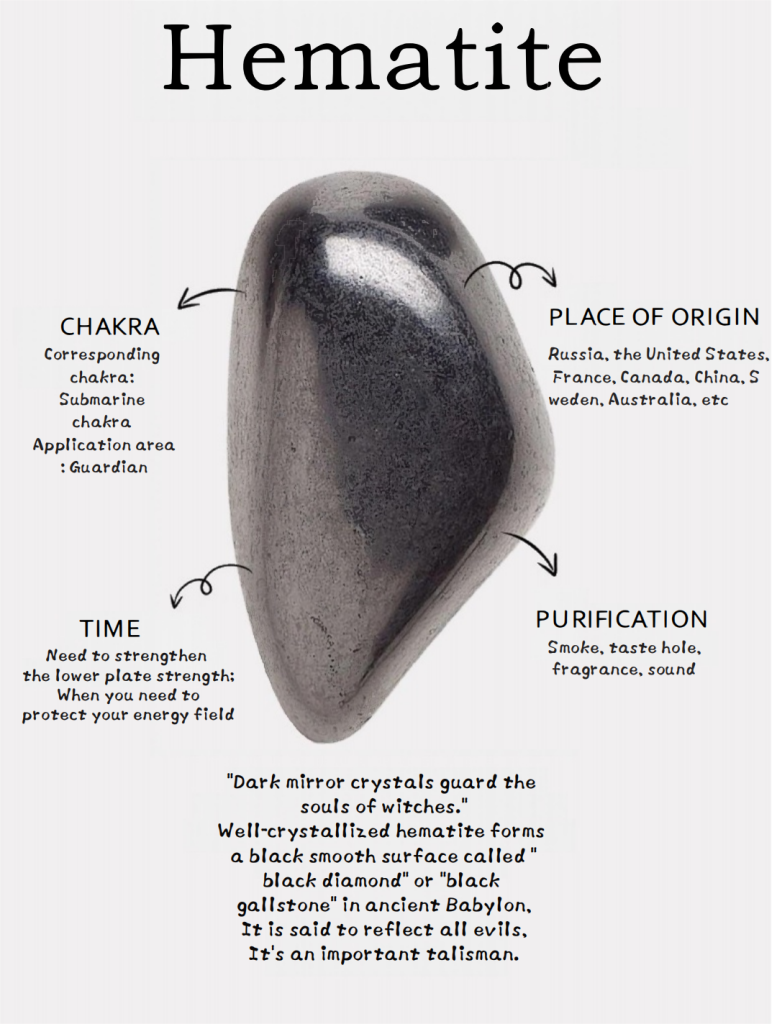
✨Hematite, with the chemical composition Fe2O3, is a type of oxide mineral that crystallizes in the trigonal crystal system. Its name is derived from the Greek word for “blood,” a reference to the mineral’s frequent reddish hue. Hematite is an iron oxide and serves as the primary ore mineral for iron extraction. Despite the increasing use of other metals, iron remains the most vital metal in various industries, making hematite an economically significant mineral.
Crystal - Hematite
The Unique Forms and Varieties of Hematite
🔮Hematite can exhibit a variety of crystal forms, though perfectly metallic rhombohedral crystals are rare. More commonly, hematite crystals appear as flat or thin plates, and in some instances, they cluster together to form rosettes, often referred to as “iron roses.” Another interesting formation is specularite, where hematite crystals develop into scaly aggregates that display a mirror-like luster. These unique forms contribute to the mineral’s appeal and are often sought after by collectors and geologists alike.
Crystal - Hematite
Hematite's Economic Importance and Uses
🔮Hematite deposits are widely distributed across the globe, with the most significant ones being of sedimentary origin. Hematite frequently occurs alongside magnetite, another iron ore. Beyond its role in ironmaking, powdered hematite has additional uses, such as being employed as a red pigment in various applications and as an abrasive material. Its versatility and abundance make hematite one of the most crucial minerals in the world, both industrially and economically.