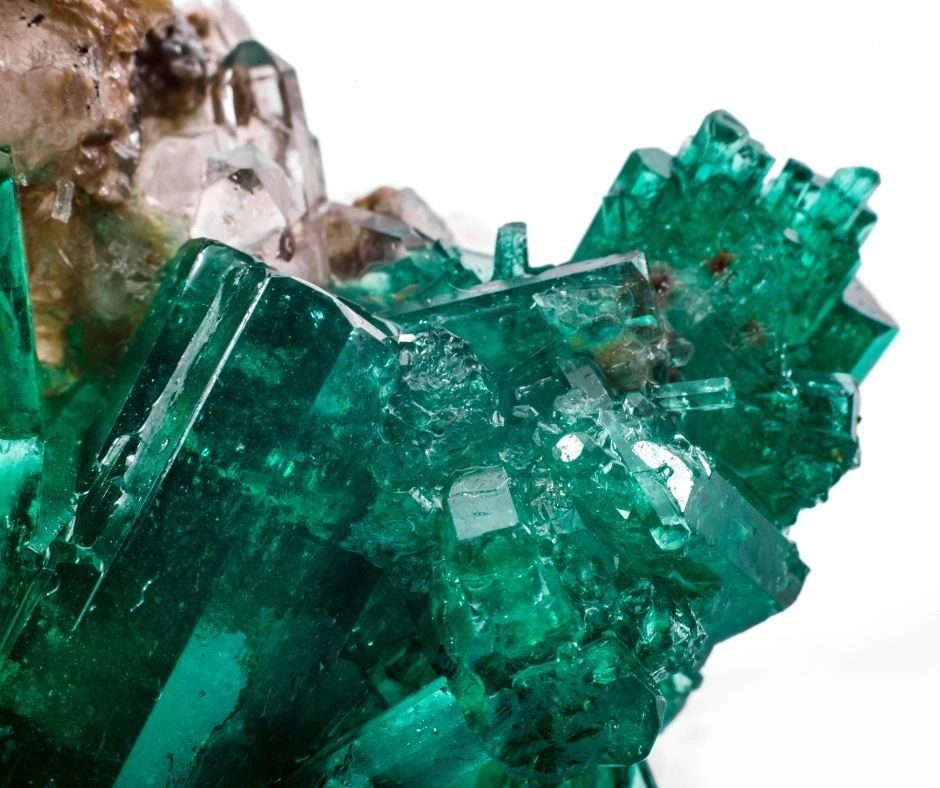
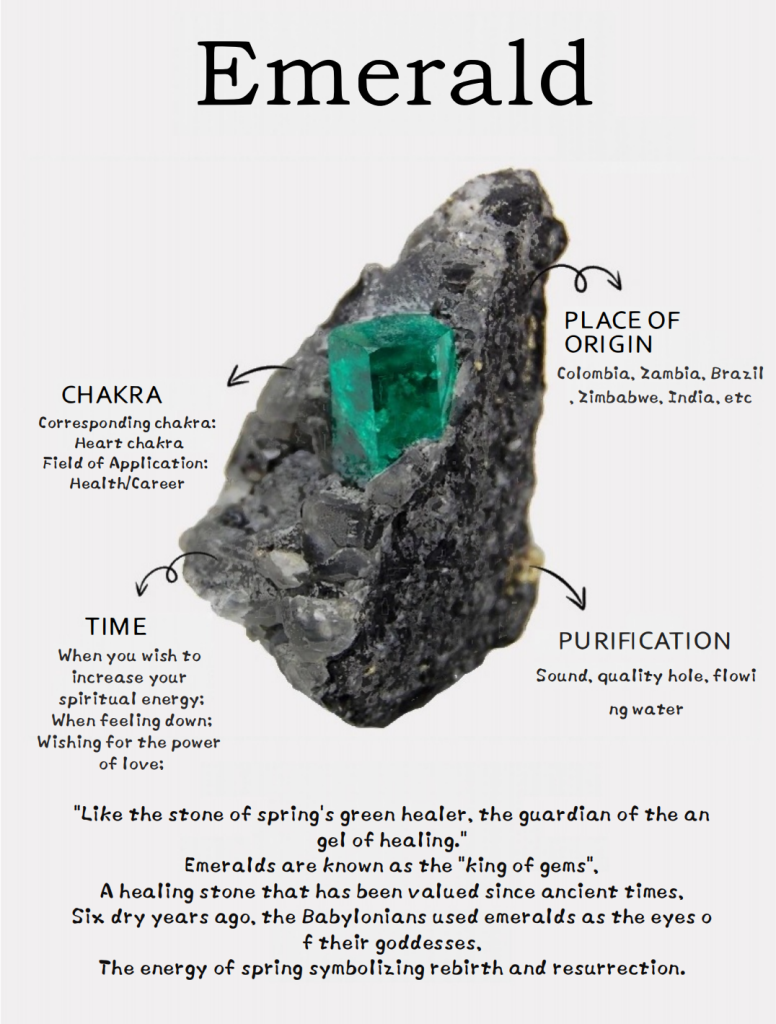
✨The name “emerald” originates from the Persian word zumurud, meaning “green gemstone.” It later transitioned into the Latin word smaragdus and, through various adaptations and misinterpretations, became the modern English term “emerald.” Throughout history, emerald has been regarded as one of the most precious gemstones. As far back as 6,000 years ago, people in ancient Babylon offered emeralds to their goddesses. Women in the ancient kingdom of Chaldea, located near the Persian Gulf, were particularly fond of emerald jewelry. Similarly, in ancient Egypt and Greece, emeralds were popular choices for adornment. In China, emeralds were highly valued during the Ming and Qing dynasties. Ming emperors considered emerald as precious as chrysoberyl cat’s eye, believing it to be essential for ceremonial attire.
Crystal - Emerald
Cultural Significance of Emerald
🔮Cleopatra was famously enamored with emeralds, going so far as to collect all the emeralds from local mines. In ancient Babylonian and Jewish traditions, emeralds symbolized vitality and youthful energy, and were held in high regard for their healing properties. In Islam, emeralds are considered sacred gemstones, which is why green, the color of emeralds, appears on the flags of many Middle Eastern countries. Today, the most renowned emerald mines are found in Colombia and other South American countries, known for producing high-quality emeralds in both quantity and beauty.
Crystal - Emerald
The Emotional and Healing Properties of Emerald
🔮Emeralds are believed to have a calming effect on the mind, promoting emotional intelligence and fostering self-love and compassion. They are also said to help restore inner peace and balance, making them powerful gemstones for emotional healing and tranquility. Whether worn as jewelry or used in healing practices, emeralds are treasured for their soothing and balancing energy.