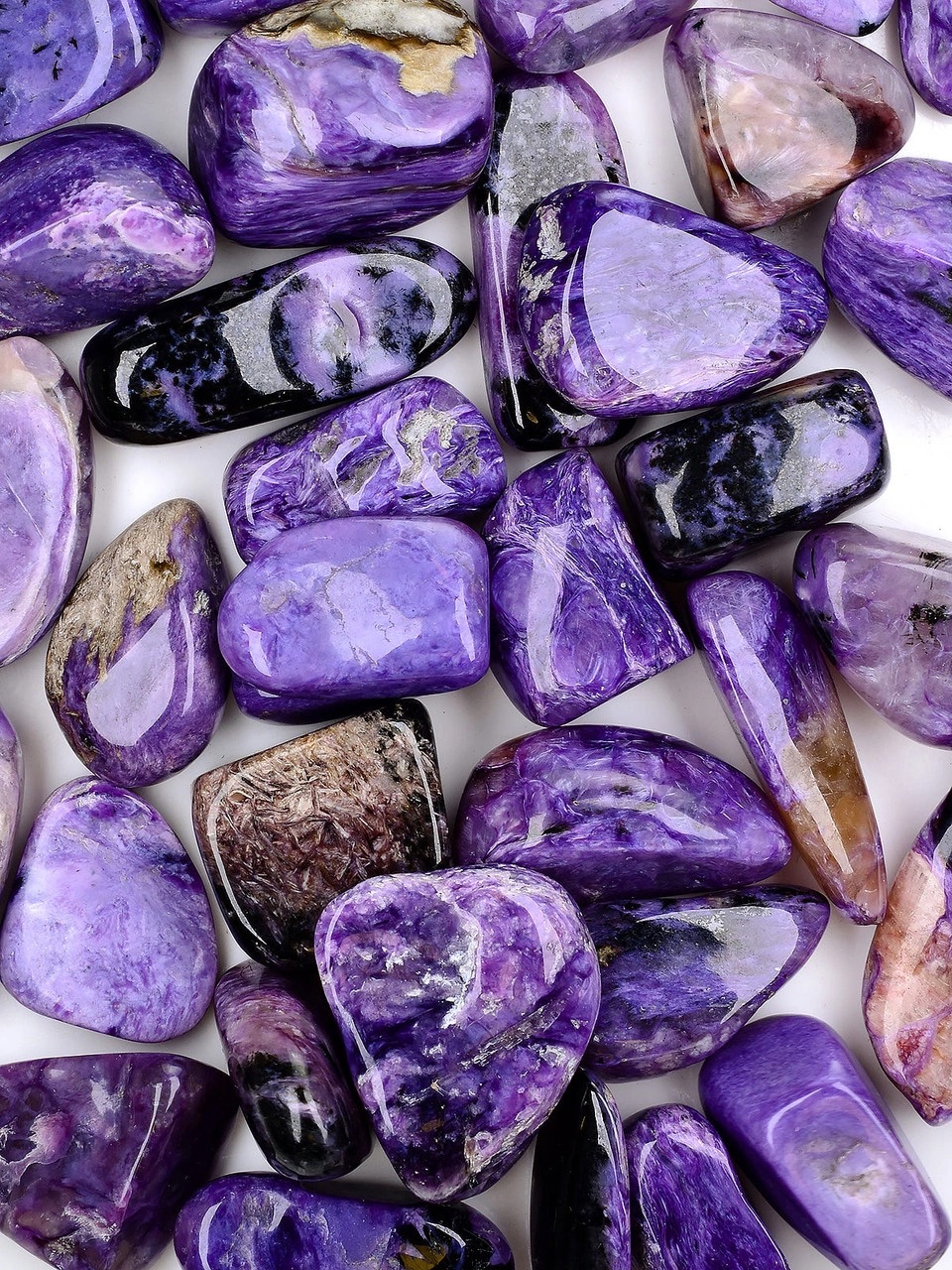
✨Charoite, also known as “Purple Dragon Stone,” is a relatively newly discovered gemstone, first found along the Chara River in the former Soviet Union in 1978. This rare purple stone is classified as a high-end mineral, formed through a unique geological process. It occurs when highly alkaline syenite intrudes into limestone, undergoing transformations due to specific pressure, temperature, and chemical conditions. The resulting mineral, Charoite, features a striking combination of purple and white hues, with long, fibrous structures that appear to twist and coil together, resembling the mythical “dragons” in motion, hence its nickname.
Crystal - Charoite
The Aesthetic and Symbolic Appeal of Charoite
🔮Known as the “Prince of Purple Stones” due to its regal appearance and rarity, high-quality Charoite consists solely of purple and white, with silky white streaks interwoven throughout the purple base. The absence of green or black inclusions is considered a mark of superior quality. Charoite’s unique visual appeal and vibrant colors make it a favorite among collectors and gemstone enthusiasts.
Crystal - Charoite
Healing Properties and Practical Uses of Charoite
🔮Charoite, with its distinctive purple glow, is believed to share similar properties with amethyst. Placing Charoite on a desk or workspace is thought to stimulate mental clarity, enhance focus, and aid in tasks like studying, exams, and creative projects. The stone is also said to help dissolve rigid, outdated beliefs, transforming them into more flexible and open-minded perspectives. Due to its beauty and metaphysical properties, Charoite is often cut into gemstone rings, beads, or carved into ornamental pieces. Larger chunks of the mineral are sometimes crafted into decorative vases, cups, and bowls, adding a luxurious touch to interior décor.